Industry News
How Silicone Patches Mechanically Address Expression Lines
Facial silicone patches work through a mechanism that is closer to gentle mechanical smoothing and hydration than any active ingredient penetrating the skin. When the patch is applied over a fine line, such as between the brows or at the corner of the eye, the gel gently splints the skin surface, limiting the small repetitive muscle movements that deepen a crease over the course of a day or during sleep. At the same time, the occlusive contact reduces transepidermal water loss from the stratum corneum in that localized area, which temporarily plumps the outer skin layer and can make a fine line appear less pronounced immediately after removal. It is worth setting expectations accurately here: this hydration-based smoothing effect is temporary and cosmetic, distinct from the longer-term collagen-related changes associated with dedicated scar therapy protocols, since a wrinkle patch is typically worn for a few hours rather than the extended daily durations used in scar management.
Patch Shape and Placement for Common Facial Zones
Because facial skin moves in different directions depending on the muscle group beneath it, patch shape needs to correspond to the orientation of the target line rather than using a generic shape everywhere.
| Facial Zone |
Typical Line Orientation |
Recommended Patch Shape |
| Glabella (Between Brows) |
Vertical |
Narrow vertical oval or diamond |
| Forehead |
Horizontal |
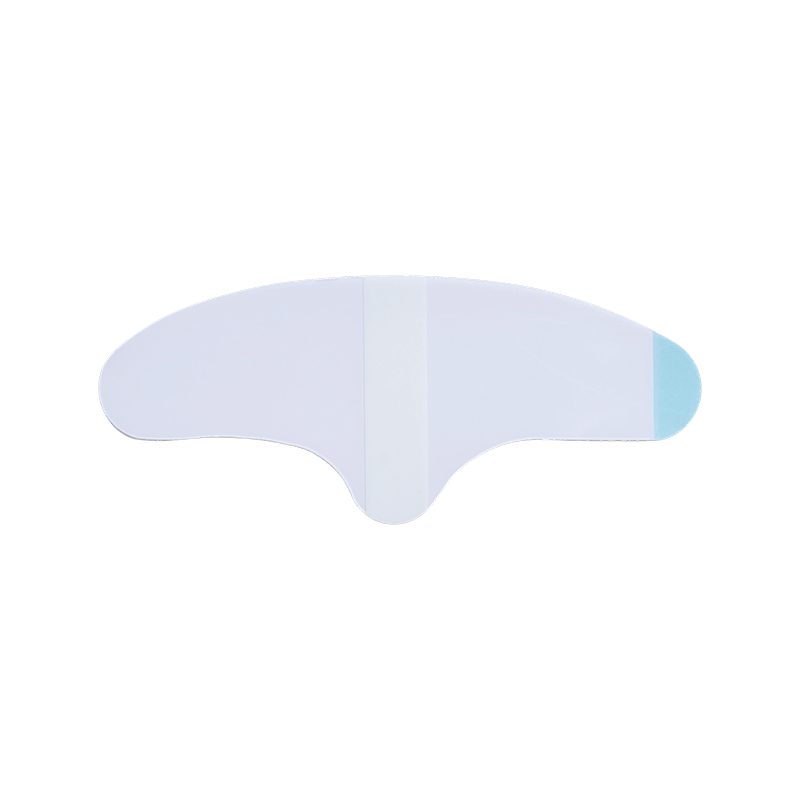
Wide rectangular or crescent |
| Crow's Feet (Eye Corner) |
Radiating/Fan-shaped |
Small curved triangle or fan shape |
| Nasolabial Fold |
Diagonal |
Curved crescent following the fold line |
Gel Softness Requirements for Delicate Periorbital Skin
Skin around the eyes is markedly thinner than skin elsewhere on the face, often measured at less than half the thickness of skin on the cheek, which means patches intended for the under-eye or crow's feet area need a noticeably softer, lower-tack gel formulation than patches designed for the forehead. A gel calibrated for periorbital use typically prioritizes a very low peel adhesion value while still maintaining enough tack to stay in place, since even mild traction on this delicate tissue during removal can contribute to irritation or, with frequent repeated use, may exacerbate the appearance of fine lines rather than improving them. This is a key reason why a single patch formulation is rarely optimal across the entire face, and product lines targeting multiple facial zones generally vary their gel softness by intended placement.
Reuse Cycle Expectations and Signs of Replacement Need
Typical Reuse Lifespan
Reusable silicone face patches are generally designed to withstand daily cleaning and reapplication for several weeks, with many products reasonably rated for 20 to 30 uses before performance noticeably declines, though this varies with gel thickness and how carefully the patch is cleaned and stored between applications.
Signs a Patch Needs Replacing
- The gel surface appears cloudy or matte instead of its original glossy, tacky finish
- The patch no longer stays adhered for the intended wear duration without repositioning
- Visible dust, lint, or debris has become embedded in the gel surface and does not rinse away
- The edges have begun to curl permanently or the material feels noticeably stiffer than when new
Compatibility With Skincare Products and Makeup Routines
Silicone patches bond best to clean, product-free skin, and residue from moisturizer, sunscreen, or makeup left on the skin before application is one of the most common reasons a patch fails to adhere properly or falls off partway through wear. For overnight use, this generally means applying the patch as the final step, after serums and moisturizer have fully absorbed, rather than layering it directly over a heavy cream. For daytime use under makeup, the patch should be applied to bare skin first, allowed to fully adhere, and only then can foundation or concealer be applied carefully around its edges, since attempting to apply a patch over existing makeup significantly reduces its hold and can transfer product residue onto the gel surface, shortening its reusable lifespan.
Distinguishing Cosmetic Wrinkle Patches From Medical Scar Sheets in Formulation Intent
Although cosmetic face patches and medical silicone scar sheets share the same base silicone gel chemistry, their formulations are typically optimized for different priorities. Scar sheets are engineered primarily for long, continuous wear time and consistent occlusion over weeks of daily use on already-healed skin, with less emphasis on cosmetic transparency or subtlety. Facial wrinkle patches, by contrast, are more often optimized for shorter wear sessions, lower visible profile, and gentler adhesion suited to intact, actively used facial skin that will be exposed to expressions, cleansing routines, and cosmetic products far more frequently than a healing scar. Recognizing this difference in design intent is useful when evaluating whether a product marketed broadly as a "silicone patch" is actually formulated for the specific use case intended.


 English
 عربى
عربى