Industry News
Matching Dressing Absorbency to Exudate Level
One of the most common causes of dressing failure in the field is a mismatch between the wound's exudate output and the absorptive capacity of the dressing chosen. A silicone-faced dressing without adequate secondary absorption can allow fluid to pool against the wound bed, leading to maceration of the surrounding skin even though the silicone contact layer itself is gentle. The table below outlines how exudate levels typically map to dressing construction choices.
| Exudate Level |
Typical Fluid Volume |
Recommended Construction |
Change Interval |
| Low |
<5 g/24h |
Thin silicone contact layer, film backing |
5–7 days |
| Moderate |
5–10 g/24h |
Silicone-faced foam |
2–4 days |
| Heavy |
>10 g/24h |
High-absorption foam or superabsorbent core with silicone border |
1–2 days |
These figures are general reference points rather than fixed rules; actual change frequency should always be adjusted based on strike-through observation and clinical judgment for the individual wound.
The Mechanism Behind Silicone's Role in Scar Management
Silicone dressings are widely used on healing incisions and hypertrophic scars, but the mechanism is often described vaguely as "hydration" without explaining why that matters mechanically. The working theory centers on occlusion: silicone forms a semi-occlusive layer that reduces transepidermal water loss from the stratum corneum, which raises local hydration in the outer skin layers. This increased hydration is believed to reduce capillary activity and fibroblast stimulation in the healing dermis, both of which are linked to excessive collagen deposition during hypertrophic scar formation.
Because the effect depends on sustained occlusion rather than any active ingredient, consistency of wear time matters more than pressure or thickness. Clinical protocols generally call for at least 12 hours of daily contact over a period of 8 to 12 weeks for measurable improvement in scar height and pliability, which is a meaningfully longer commitment than most patients expect from a topical scar product.
Combining Silicone Dressings With Negative Pressure Wound Therapy
Why a Contact Layer Is Needed Under NPWT Foam
Negative pressure wound therapy foam is highly effective at exudate removal but can adhere directly to granulation tissue, causing pain and bleeding at each dressing change. Placing a perforated silicone contact layer between the wound bed and the NPWT foam allows negative pressure and fluid to pass through while preventing the foam from integrating into new tissue growth.
Perforation Density and Pressure Transmission
The perforation pattern of the silicone layer directly affects therapy performance. Too few or too small perforations can dampen pressure transmission to the wound bed, reducing NPWT effectiveness, while excessively large perforations allow granulation tissue to bulge through and adhere to the foam anyway. Most validated silicone interface layers use perforation densities in the range of 40–60% open area to balance these two failure modes.
Adjusting Dressing Selection to the Phase of Wound Healing
A wound's needs change as it moves through the healing process, and using the same dressing type from start to finish is a common source of delayed healing.
- Inflammatory phase: prioritize atraumatic removal and infection monitoring; frequent dressing checks are more important than long wear time
- Proliferative phase: prioritize moisture balance and protection of fragile new granulation tissue, where silicone-faced foam performs well
- Remodeling phase: prioritize low-profile, extended-wear options that support scar flattening without restricting mobility over the healed area
Antimicrobial Additives in Silicone Dressing Systems
Silver-infused silicone dressings are increasingly used for wounds at risk of colonization, but the delivery method affects both efficacy and cost. Ionic silver embedded directly in the foam layer releases more gradually and tends to maintain antimicrobial activity for the full wear period, while silver coatings applied to the silicone contact surface act faster on contact but may deplete before the dressing's absorptive capacity is exhausted. For wounds without confirmed infection risk, routine use of silver dressings is generally discouraged, since prolonged silver exposure has been associated with mild cytotoxic effects on new epithelial cells at the wound margin, and reserving these products for clinically indicated cases avoids unnecessary tissue exposure.
Fitting Dressings to Irregular Body Contours and Skin Folds
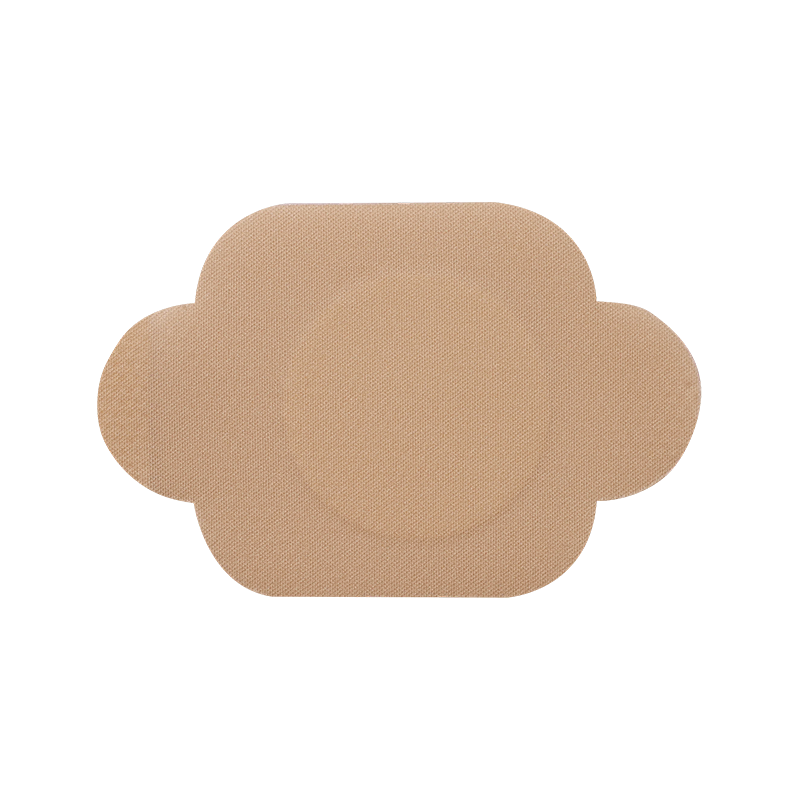
Wounds located in skin folds, over joints, or across curved anatomy such as the sacrum present a persistent challenge: standard flat dressings tend to wrinkle or lift at the edges as the body moves, creating channels where fluid or bacteria can bypass the adhesive border. Dressings designed with multidirectional stretch backing and a segmented or star-shaped border conform more effectively to these contours than dressings with a single continuous adhesive perimeter, since the segments can flex independently rather than transmitting tension across the whole border when the joint moves. For deep folds such as the axilla or groin, trimming the dressing to reduce overall surface area before application—rather than relying on the product's flexibility alone—often produces a more secure seal over a full day of movement.


 English
 عربى
عربى