Industry News
Window Design and Its Effect on Catheter Site Monitoring
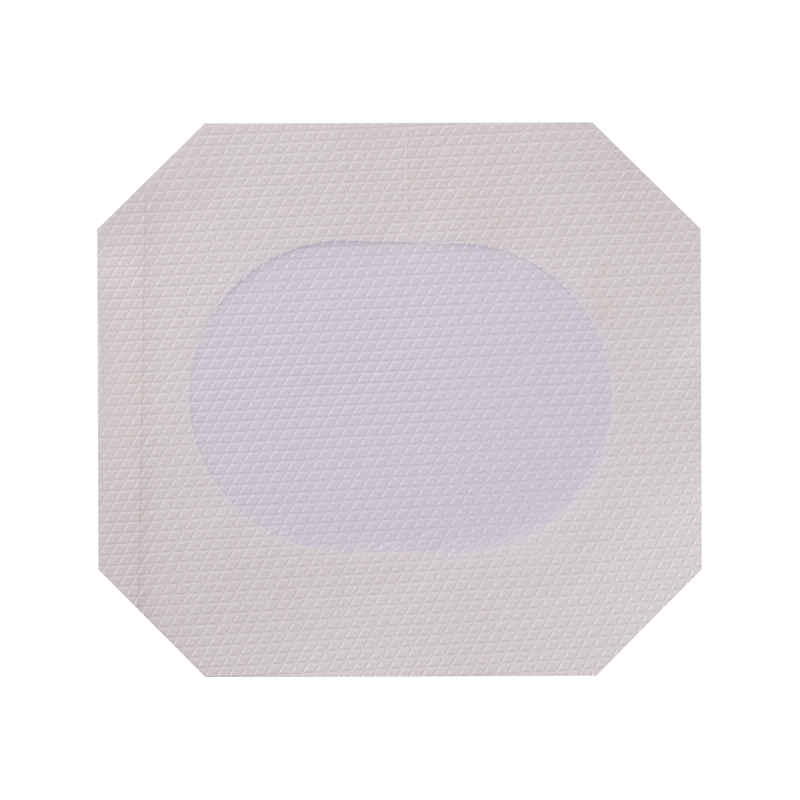
The transparent window of an I.V. dressing is not just a visibility feature; its size, shape, and film clarity directly affect how early a clinician can detect early signs of phlebitis or infiltration. A window that is too small forces clinicians to lift the dressing edge for a proper look, which defeats the purpose of a transparent design and introduces unnecessary handling of the insertion site. Films with low haze values, typically below 5% on standard haze testing, allow subtle changes such as slight redness or fluid tracking along the catheter to be identified without dressing removal, which is particularly important for detecting early-stage infiltration before it becomes clinically obvious.
Window shape also matters for catheter hubs with side ports or extension sets. A rectangular window elongated along the catheter axis generally provides better visibility of the full insertion tract than a square window of the same total area, since it keeps both the puncture site and a portion of the catheter track in view simultaneously.
Border Adhesive Zones vs Full-Surface Adhesion
Full-Surface Silicone Film Dressings
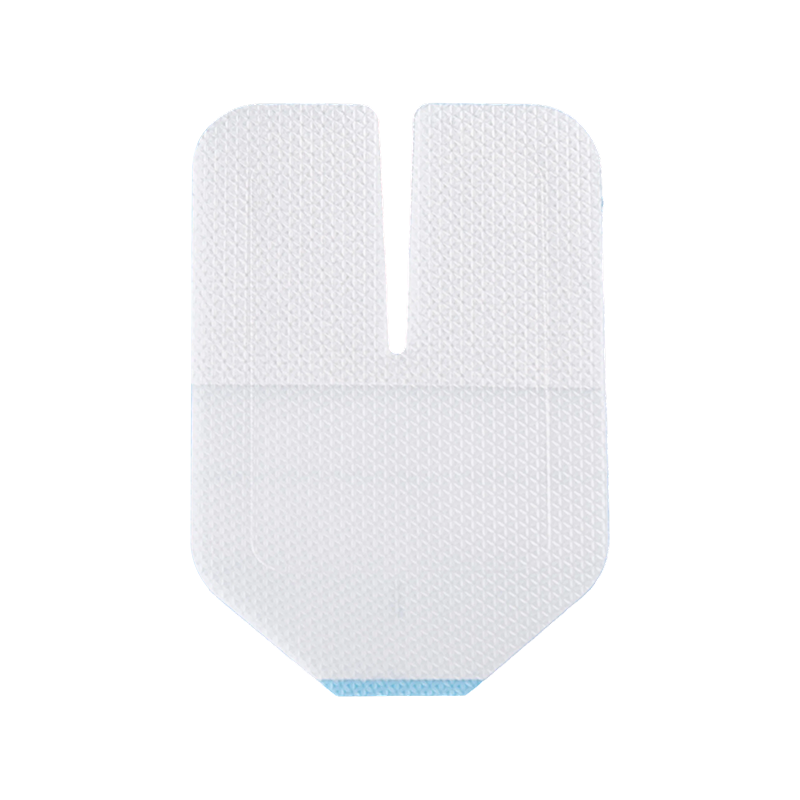
Some I.V. dressings apply silicone adhesive across the entire film surface, providing consistent seal integrity and a lower risk of edge lifting during patient movement. This design suits longer indwelling catheters where the dressing may remain in place for several days, since uniform adhesion resists gradual peeling from repeated friction against bedding or clothing.
Border-Only Adhesive Designs
Border-only designs limit silicone adhesive to a perimeter strip, leaving the central window area adhesive-free or lightly tacked. This reduces the total adhesive contact area over the puncture site itself, which can lower the risk of localized irritation for patients who require frequent catheter site changes, though it generally provides slightly less resistance to edge curling in high-movement locations such as the hand or wrist.
Securement Force Requirements at Common Catheter Sites
Different catheter insertion sites experience different mechanical demands, and dressing selection should account for this rather than treating all I.V. sites the same. The table below summarizes typical movement stress and the securement characteristics generally recommended for each location.
| Insertion Site |
Movement Stress |
Recommended Feature |
| Dorsal Hand |
High |
High-stretch film, reinforced border adhesion |
| Antecubital Fossa |
Moderate–High |
Elastic backing, wide securement border |
| Forearm |
Low–Moderate |
Standard film, moderate tack |
| Subclavian / Central Line |
Low |
Extended wear film, chlorhexidine gel pad compatibility |
Compatibility With Chlorhexidine and Skin Antiseptics
Chlorhexidine gluconate is the standard antiseptic used before catheter insertion, but it needs to be fully dry before the dressing is applied, since residual moisture trapped under the film can reduce adhesion and, in rare cases, contribute to skin irritation from prolonged antiseptic contact. Most manufacturers recommend a minimum dry time of 30 seconds for aqueous chlorhexidine and up to 2 minutes for alcohol-based formulations before applying a silicone I.V. dressing.
- Confirm the antiseptic has visibly dried rather than timing by feel, since alcohol-based solutions can appear dry on the surface while remaining damp underneath
- Avoid applying the dressing while the site is still tacky, as this can cause the film to bond unevenly and create air channels
- Use dressings validated for compatibility with chlorhexidine-impregnated foam pads if one is included at the insertion site
Reducing Catheter Movement Inside the Dressing
Even a well-secured dressing cannot fully prevent catheter-related complications if the catheter itself is allowed to pivot or slide within the dressing footprint. Micro-movement at the insertion point is a recognized contributor to mechanical phlebitis, since repeated friction between the catheter and the vein wall irritates the vessel lining over time. Integrated securement features, such as a molded tab or built-in strap that anchors the catheter hub independently of the transparent film, reduce this pivoting motion more effectively than relying on the adhesive film alone to hold the device steady.
Extended Wear Time and Infection Risk Trade-offs
Extending I.V. dressing wear time reduces the frequency of site disturbance, which is generally beneficial, but it also increases the window during which any contamination that does occur can progress undetected. Current guidance commonly supports routine transparent film dressing changes every 5 to 7 days for peripheral catheters, provided the dressing remains clean, dry, and intact, while gauze dressings under film require more frequent changes due to lower visibility of the site. If a dressing becomes damp, loosened, or visibly soiled before the scheduled interval, it should be changed immediately regardless of how much of the wear-time window remains, since dressing integrity takes priority over adhering to a fixed schedule.


 English
 عربى
عربى