English
 عربى

A heel pressure injury that soaks through gauze twice per shift is not a gauze problem — it is a dressing-selection problem. When a wound produces moderate to heavy exudate, a foam dressing is the category most wound-care teams reach for first, and a silicone-faced foam dressing is the version that best protects the fragile skin surrounding the wound. That conclusion is easy to state and worth unpacking, because foam dressings are far from interchangeable: the foam core, the wound contact layer, and the fixation method each change how the product behaves on an actual patient.
Content
- 1 What a Foam Dressing for Wounds Actually Does
- 2 The Main Types of Foam Dressings and Where Each Fits
- 3 When a Foam Dressing Is the Right Choice and When It Is Not
- 4 Why the Wound Contact Layer Matters: The Silicone Advantage
- 5 How to Apply and Change a Foam Dressing Correctly
- 6 What to Check Before Choosing a Foam Dressing Supplier
What a Foam Dressing for Wounds Actually Does
A foam dressing is built around a soft polyurethane foam core whose open cells draw wound fluid away from the wound bed and hold it inside the pad. This absorption does two jobs at once: it keeps excess moisture from pooling on the wound and the surrounding skin, and it preserves enough humidity to support the moist-wound environment that cell migration requires. Well-engineered designs also wick fluid sideways so it does not sit under the highest-pressure point of the pad.
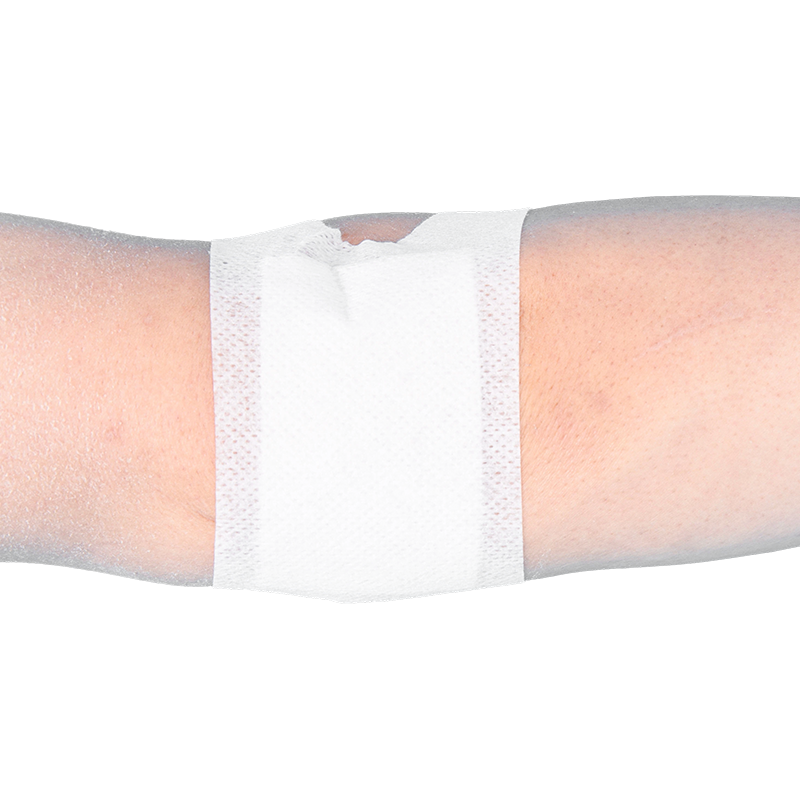
Three secondary functions matter just as much in daily practice. First, the foam cushions, which is why these dressings are specified for heels, sacrums, and elbows where dressings get pressed into mattresses and footwear. Second, the structure insulates, keeping the wound bed warm enough for enzyme activity and cell division to continue. Third, most products pair the foam with a waterproof outer film that blocks outside contamination while allowing moisture vapor to escape — the property that makes multi-day wear time, often three to seven days depending on drainage, realistic for both nursing staff and patients.
The Main Types of Foam Dressings and Where Each Fits
Manufacturers segment foam dressings mainly by contact layer and fixation method, and those two choices drive nearly every practical difference between products on the shelf.
| Type | Best suited for | Main limitation |
|---|---|---|
| Adhesive foam (acrylic border) | Wounds with healthy, intact surrounding skin | Removal can strip fragile skin |
| Non-adhesive foam | Very fragile skin or sensitive wound beds | Requires tape, film, or bandage for fixation |
| Silicone-faced foam | Fragile skin, frequent changes, pain-sensitive patients | Higher unit cost than acrylic versions |
| Bordered high-absorbency foam | Heavy exudate, stage II–IV pressure injuries | Bulkier under clothing or compression wraps |
| Antimicrobial foam (silver or PHMB) | Wounds with elevated bioburden or infection risk | Intended for short, defined courses rather than routine use |
| Cavity or anatomically shaped foam | Deep, tunneling, or joint-area wounds | Shape must match the wound site closely |
Silicone-faced foam deserves particular attention here. It has become the default recommendation wherever skin integrity drives outcomes: geriatric wards, oncology units, neonatal care, and any patient whose dressing changes outnumber their healing milestones.
When a Foam Dressing Is the Right Choice and When It Is Not
Foam earns its place on wounds that drain. The clearest fits include:
- Pressure injuries with moderate to heavy exudate
- Venous leg ulcers managed under compression therapy
- Diabetic foot ulcers with ongoing drainage
- Skin tears and donor sites where the wound bed must stay undisturbed
- Post-surgical wounds releasing fluid during the first days of healing
The same absorbency becomes a liability elsewhere. On a dry or lightly exuding wound, a foam pad can pull moisture out of the bed and slow closure, so hydrogel or thin film options fit better. Necrotic wounds covered with dry eschar need debridement first, not absorption. Fully opaque foam also hides the wound bed, which is a problem for lesions that require visual inspection at every visit. Arterial ulcers are frequently managed under intentionally dry protocols, so foam is used there only when the care team specifically decides the drainage justifies it.
Why the Wound Contact Layer Matters: The Silicone Advantage
Repeated removal of acrylic adhesive is one of the most under-appreciated causes of delayed healing. Every change can strip cells from the stratum corneum, and the resulting damage — known as medical adhesive-related skin injury, or MARSI — compounds across weeks of care. In elderly patients, people on long-term steroids, and anyone with thin or dialysis-stressed skin, that cumulative trauma can undo the very progress the dressing was chosen to protect.
Silicone gel adhesive changes the equation. It holds securely at rest, releases at a low peel force, can be lifted and repositioned during application, and leaves no residue behind. Pain scores at dressing changes drop, periwound skin stays intact, and the same pad stays in place for its full wear time instead of being changed early because removal hurts. This is also where formulation skill separates suppliers: the tack, peel profile, and coating weight of a medical-grade silicone gel layer are engineered properties, not commodities. A square silicone foam dressing with a well-balanced silicone gel layer suits flat wounds such as sacral and post-operative sites, while an anatomically shaped silicone foam dressing is cut to follow heels and elbows without creasing or lifting at the edges. For a broader view of how these materials fit procurement decisions, our analysis of silicone gel dressings for clinical and distributor settings covers that shift in detail.
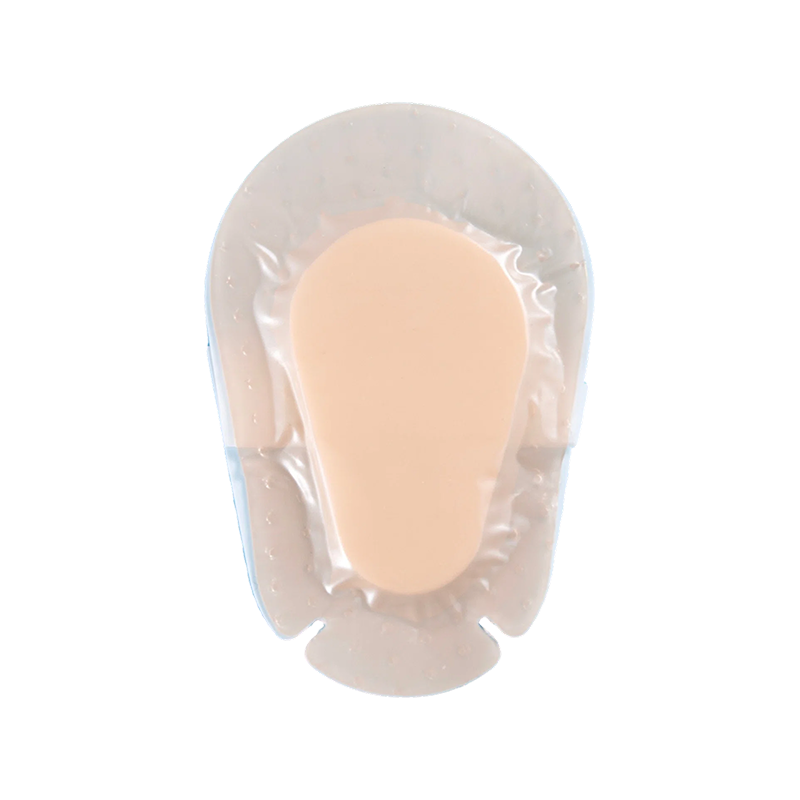
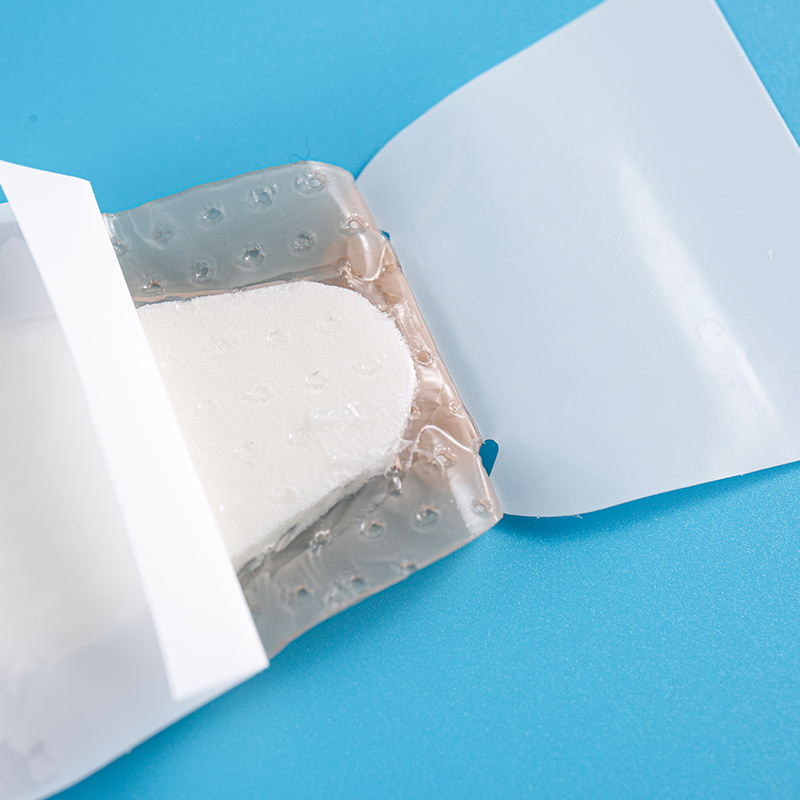 Anatomical Shape Silicone Foam Dressing for Heels and ElbowsPre-contoured for bony prominences like heels, elbows, and the sacrum, this shaped foam dressing maintains a perimeter seal where square dressings lift, managing heavier exudate while protecting fragile periwound skin.View Product →
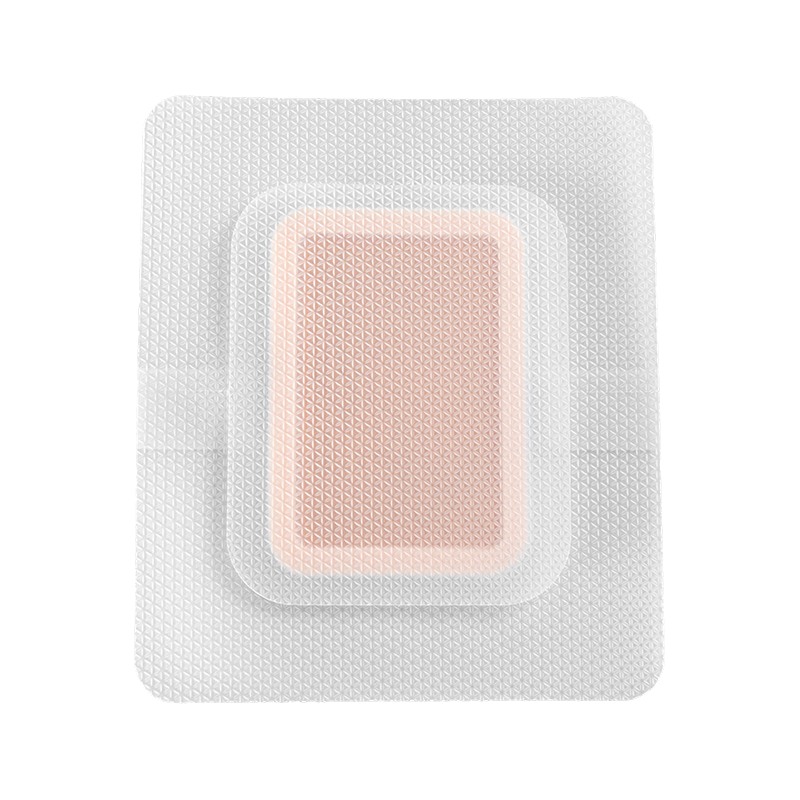
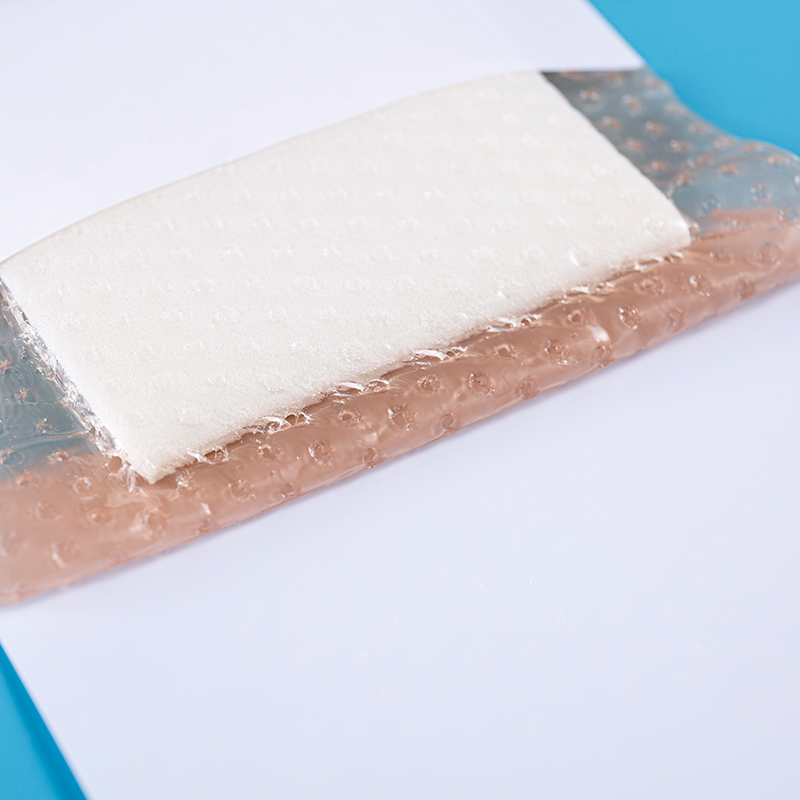 Square Silicone Foam Dressing for Flat WoundsA multi-layer foam dressing with a silicone wound-contact layer for moderate to highly exuding wounds. Its square format suits flat sites such as sacral and post-operative wounds, supporting atraumatic changes and full wear time.View Product →
How to Apply and Change a Foam Dressing Correctly
Technique determines whether the dressing performs as designed. The routine below reflects standard clinical guidance:
- Assess exudate volume and the condition of the surrounding skin before every change.
- Cleanse the wound and dry the periwound skin thoroughly, since adhesive bonds poorly to damp skin.
- Select a size that extends at least 2 cm beyond the wound edge so the border bonds to sound skin.
- Warm the dressing between your hands, peel off the release liner, and smooth it on without stretching.
- On joints and curved surfaces, use an anatomical cut or trim a plain pad to shape before removing the liner; never cut the dressing in place on the patient.
- For non-adhesive versions, secure the pad with a skin-friendly fixation product — the reasoning is covered in our guide to what silicone medical tapes are and why clinicians prefer them.
- Change the dressing when saturation approaches the border or strikethrough appears, typically every three to seven days.
Reassess the choice as the wound heals. As exudate declines, stepping down to a thinner silicone dressing reduces cost and avoids over-drying the bed; staying with a high-absorbency pad past its useful window wastes budget and can complicate the final phase of closure.
What to Check Before Choosing a Foam Dressing Supplier
For clinics building a formulary and distributors comparing catalogs, quality in this category comes down to verifiable factors rather than brochure claims:
- Certification scope: ISO 13485 registration, CE marking, and FDA listing, confirmed against the actual product class.
- Production environment: cleanroom-controlled manufacturing, such as a Class 100,000 GMP facility, which limits bioburden and batch variation.
- In-house adhesive development: suppliers who formulate their own silicone gel can tune tack and peel force for specific skin types instead of reselling a generic coating.
- Customization capacity: wound-contact shapes, absorbency grades, borders, and sizes adapted to your patient population or brand requirements.
- OEM/ODM support: complete documentation, regulatory files, and the flexibility to develop private-label configurations.
STIC (Shanghai) Co., Ltd. operates in exactly this space as a technology-driven manufacturer of medical-grade silicone gel adhesives, producing its full silicone foam dressing range in a Class 100,000 GMP cleanroom under ISO, CE, and FDA-aligned quality systems, with OEM/ODM support for size, shape, and adhesive customization. Whether you buy standard formats or commission a tailored configuration, the evaluation logic stays the same: match the dressing to the wound's exudate level, prioritize the contact layer that protects the skin around it, and source from a manufacturer who can prove how the product was made.
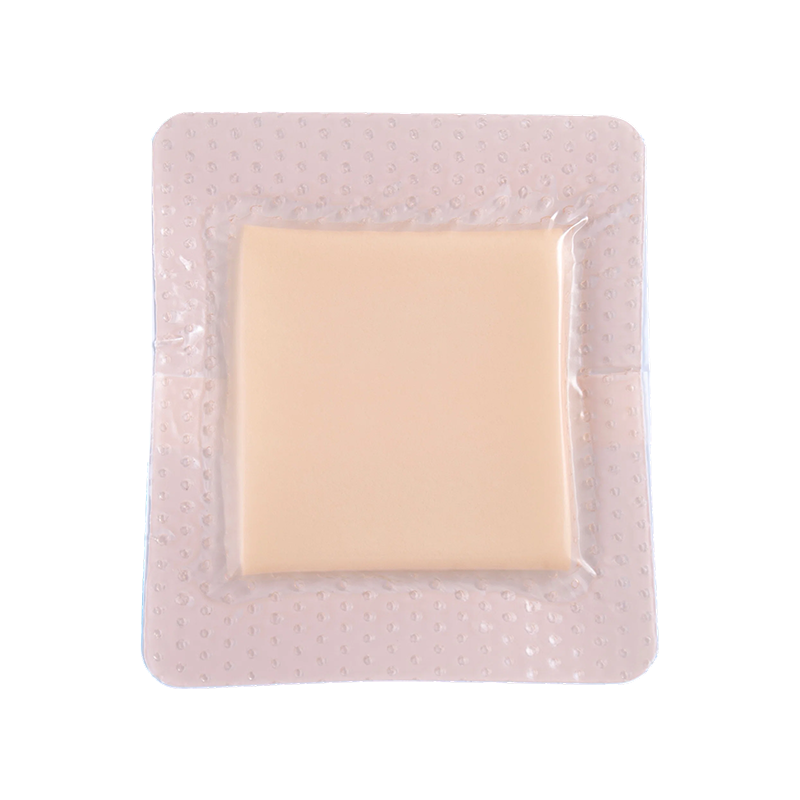 STIC Silicone Foam Dressing Manufacturer OverviewSTIC produces its silicone foam dressing range in a Class 100,000 cleanroom under ISO, CE, and FDA-aligned systems, offering OEM and ODM customization for procurement teams sourcing clinical-grade wound care.View Product →